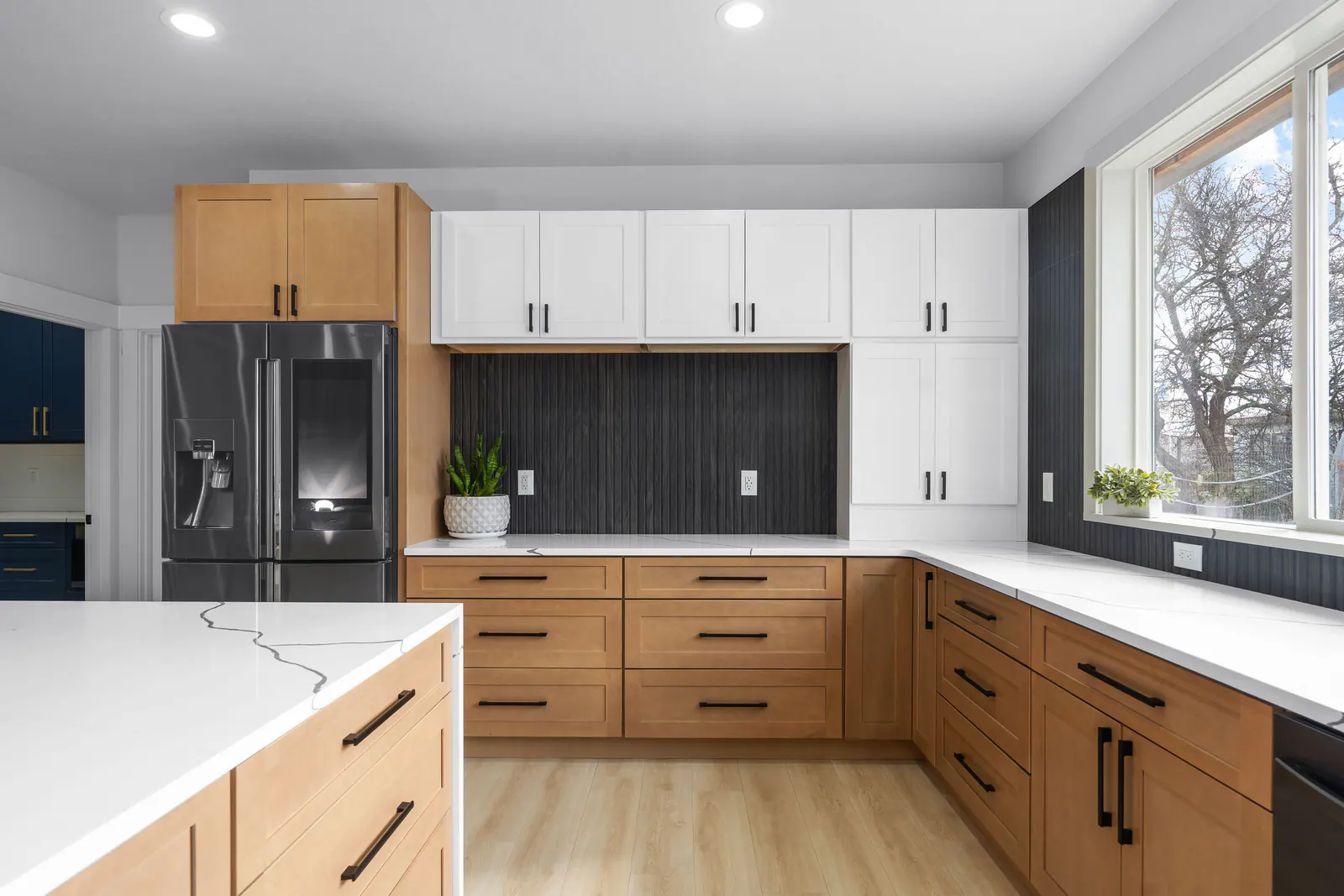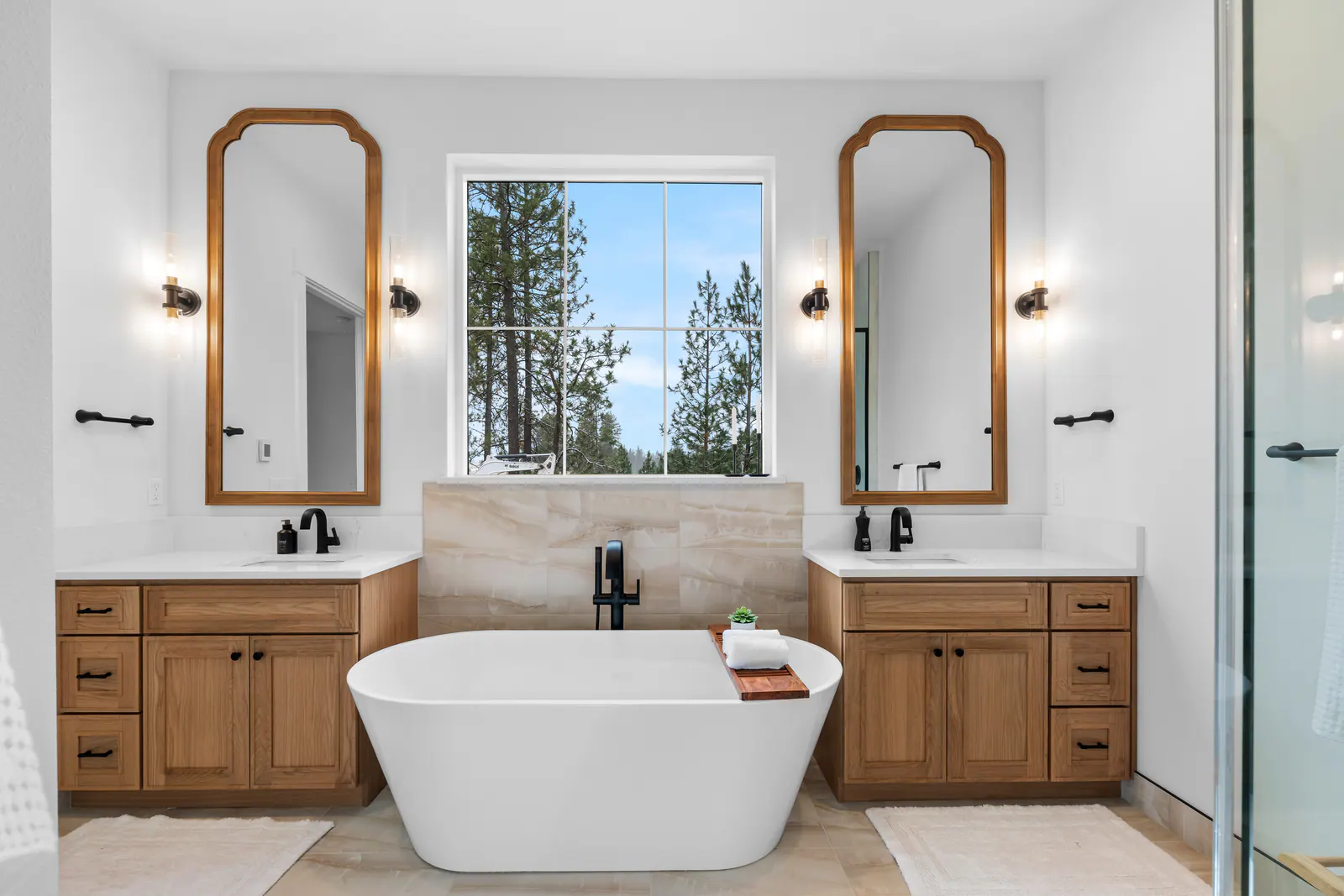

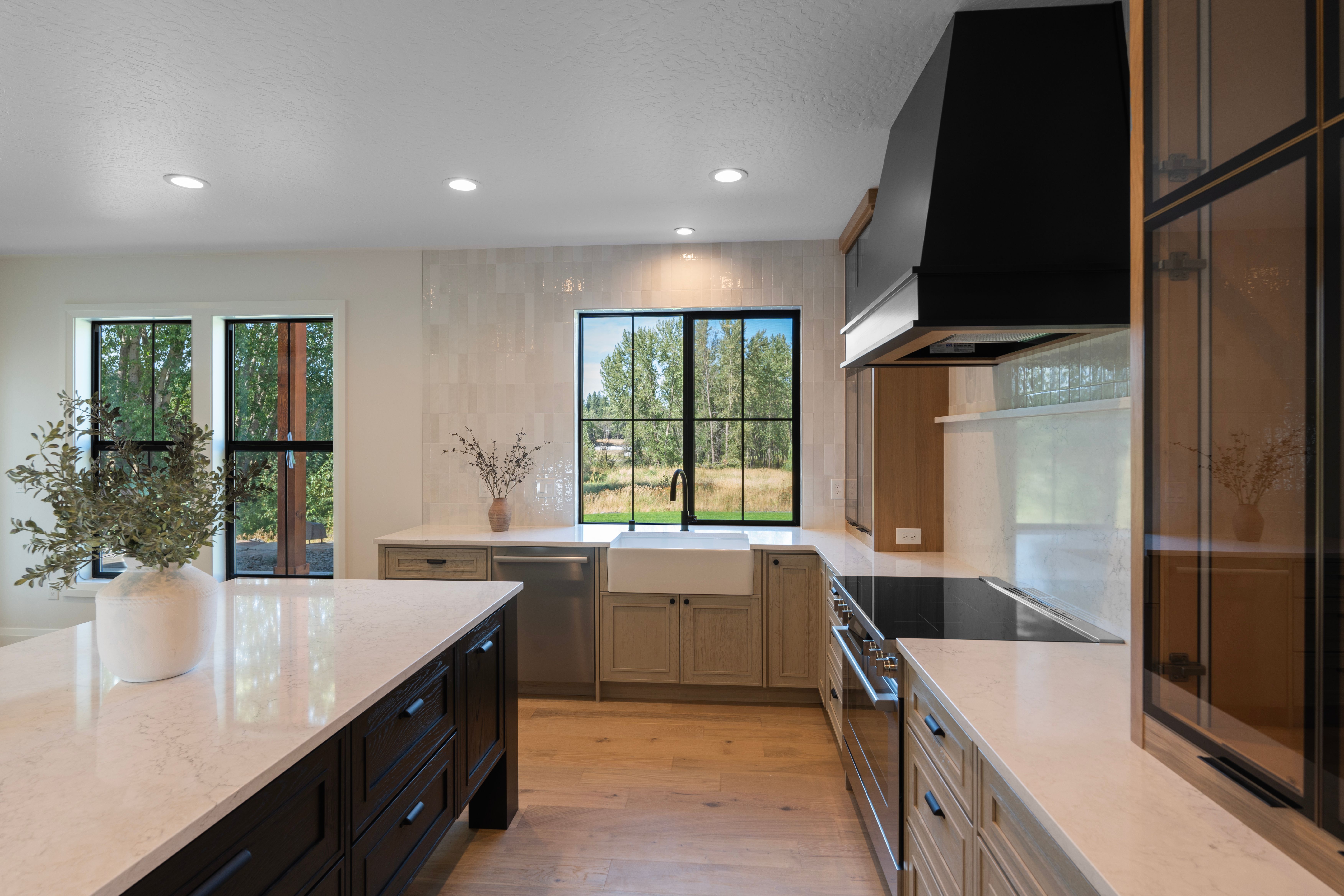
Quartz countertops have been the headline story for the better part of a decade, and they're still leading the showroom in 2026. What's changed is what people are picking within quartz — and where natural stone is winning back ground it had quietly given up.
Here are the countertop directions we're fabricating and installing right now.
1. Quartz Still Leads — But the Patterns Have Changed
Quartz remains the easiest yes for most kitchens. Non-porous, no sealing, hundreds of color and pattern options, and a price point that's gotten more reasonable as manufacturing has matured. That part of the story hasn't shifted.
What has shifted is taste. Five years ago, the most-requested look was a quiet white with subtle gray flecks. Now we're cutting:
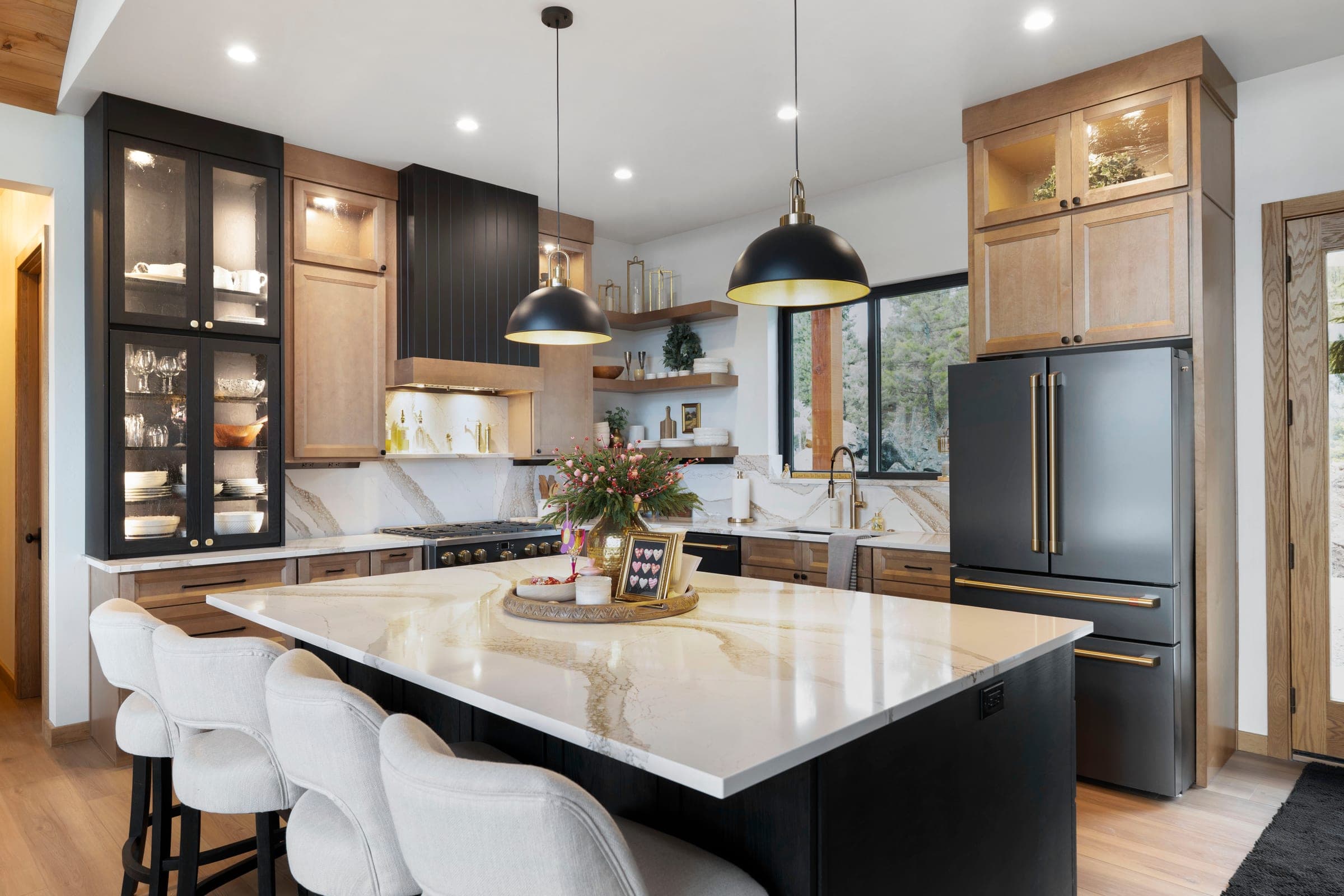
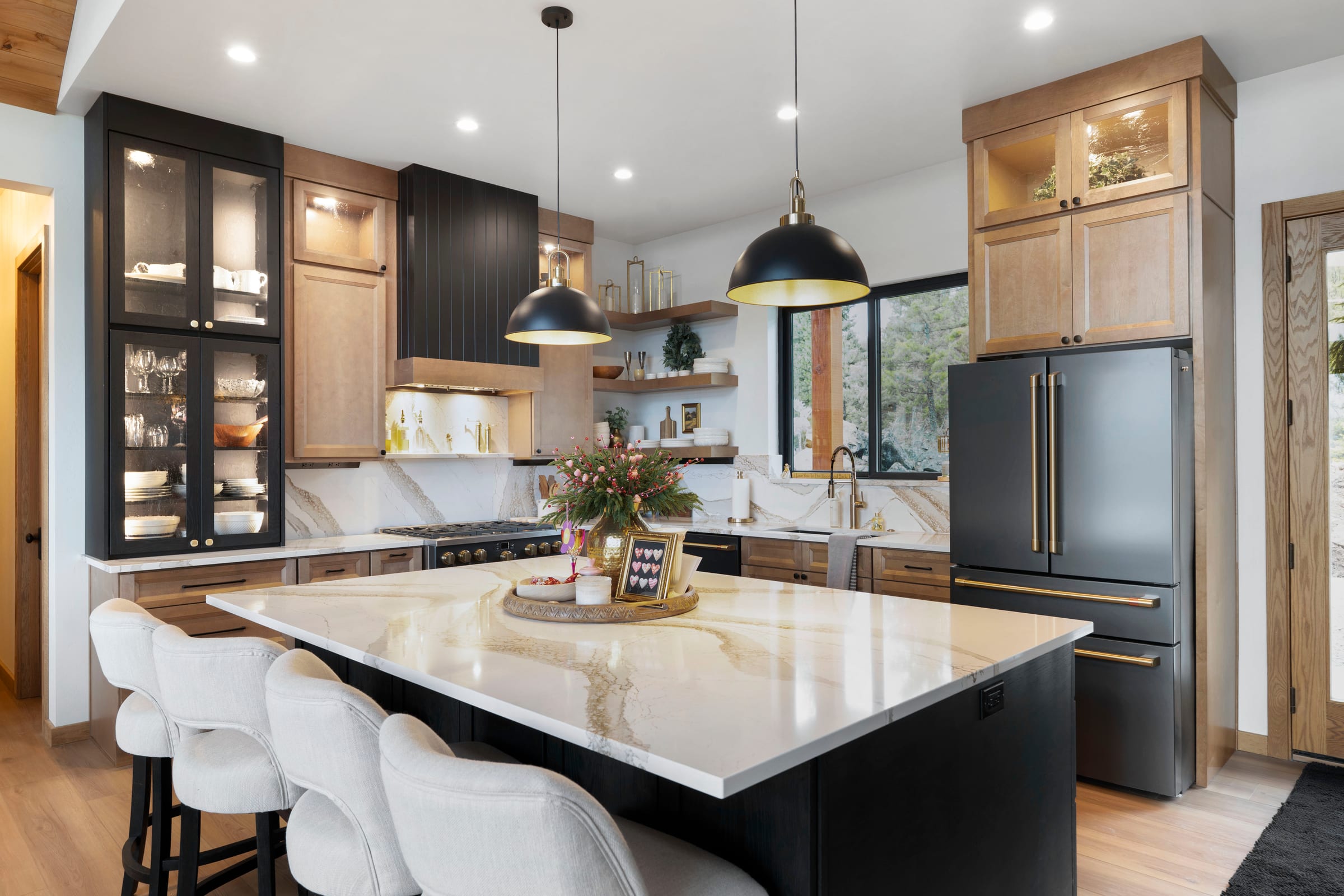
- Marble-look quartz with bold veining. Wide, decisive veins instead of soft, busy mottling. Cambria's bigger statement patterns, MSI's recent collections, and a handful of Caesarstone designs all sit in this lane.
- Warm-cream backgrounds. The cool-white quartz era is fading. Cream, bone, and warm off-white tops pair better with the timber and earth-tone cabinets we're seeing in the same kitchens.
- Honed and matte finishes. Polished is no longer the default. A matte or honed quartz hides fingerprints, looks more like real stone, and reads softer in photos.
2. Bold and Dark Tops Are Real Again
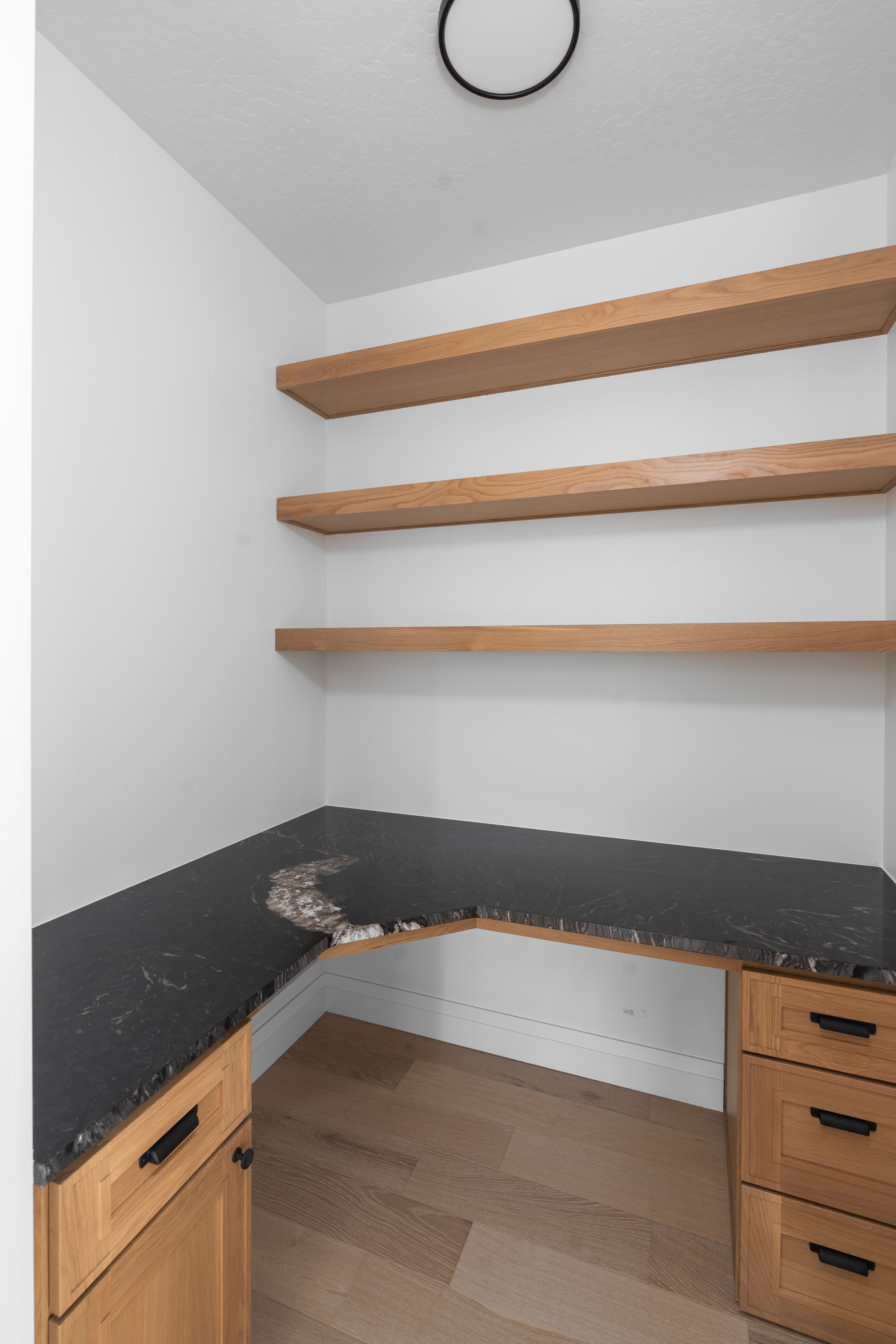
Black and deep charcoal countertops left the conversation for a long time. They're back — and not as a goth-kitchen statement, but as a grown-up choice that grounds a lighter cabinet palette.
Where we're using them:
- On islands, paired with off-white or warm-wood perimeter tops.
- On full kitchens with shaker doors in soft white or pale green, where a dark top adds the weight the room needs.
- In butler's pantries and coffee bars, where the moodier feel is fitting.
The materials carrying this look in 2026 are honed black granite, dark soapstone, leathered black quartzite, and a growing number of dark-base quartz patterns.
3. Natural Stone Is Making a Quiet Comeback
The pendulum that swung hard toward engineered surfaces is settling back. Quartzite, in particular, is having a moment — and we're seeing more genuine marble specified than at any point in the last five years.
What's driving the return:
- A general appetite for "real" materials — natural wood, natural stone, hand-glazed tile.
- Better client education about sealing. People understand it's a yearly task, not a daily chore.
- A look you simply can't get from engineered material — the depth, the translucency at the edge, the slab-to-slab variation.
The honest tradeoff: natural stone requires a little more thought. We always recommend selecting full slabs in person rather than ordering off a sample chip, because the variation is part of the point.
4. Waterfall Edges, but Edited
The waterfall island — where the countertop continues straight down the side panel — is still in heavy rotation. What's different in 2026 is the restraint. We're cutting waterfalls on the island only, almost never on the perimeter, and clients are choosing them when the slab pattern actually deserves the showcase.
Side notes:
- A book-matched waterfall (where the side panel mirrors the top) only works in materials with strong, continuous veining.
- Mitered edges sit cleaner than butt-jointed waterfalls, but they're more expensive and unforgiving on softer stones.
- A waterfall on both ends of an island reads more formal; a waterfall on a single end reads more contemporary.
5. Quieter Edge Profiles
Big ogee and bullnose edges have largely left the room. The two profiles we cut most often in 2026:
- Eased (or "pencil") edge — a tiny softening of an essentially square top. Modern, quiet, almost invisible.
- Mitered edge — gives the appearance of a thicker stone slab without the weight or cost. Best on materials with strong patterning.
Thicker edges (1.5" or 2cm doubled up) are coming back too, especially on islands. The thinness craze has reversed — people want the countertop to feel substantial.
6. Bigger Slabs, Fewer Seams
Manufacturing has gotten better at producing oversized slabs — "jumbo" sizes that let us cut a six-foot island top without a seam. This is one of the quieter trends but probably the most universally popular: nobody has ever asked us to add a seam to a kitchen.
If a seamless island matters to you, ask early. Slab availability shapes the design as much as the design shapes slab choice.
7. Texture and Movement Beyond the Counter
A few related trends worth flagging because they affect how the countertop reads:
- Full-height stone backsplashes that match the countertop. Eliminates the busy line where countertop meets tile and lets the slab pattern do the work.
- Mixed materials in one kitchen — a quartz perimeter with a quartzite island, or a marble baking station nested into a granite run.
- Honed and leathered finishes on natural stone, which reduce glare and feel more tactile.
What We'd Recommend
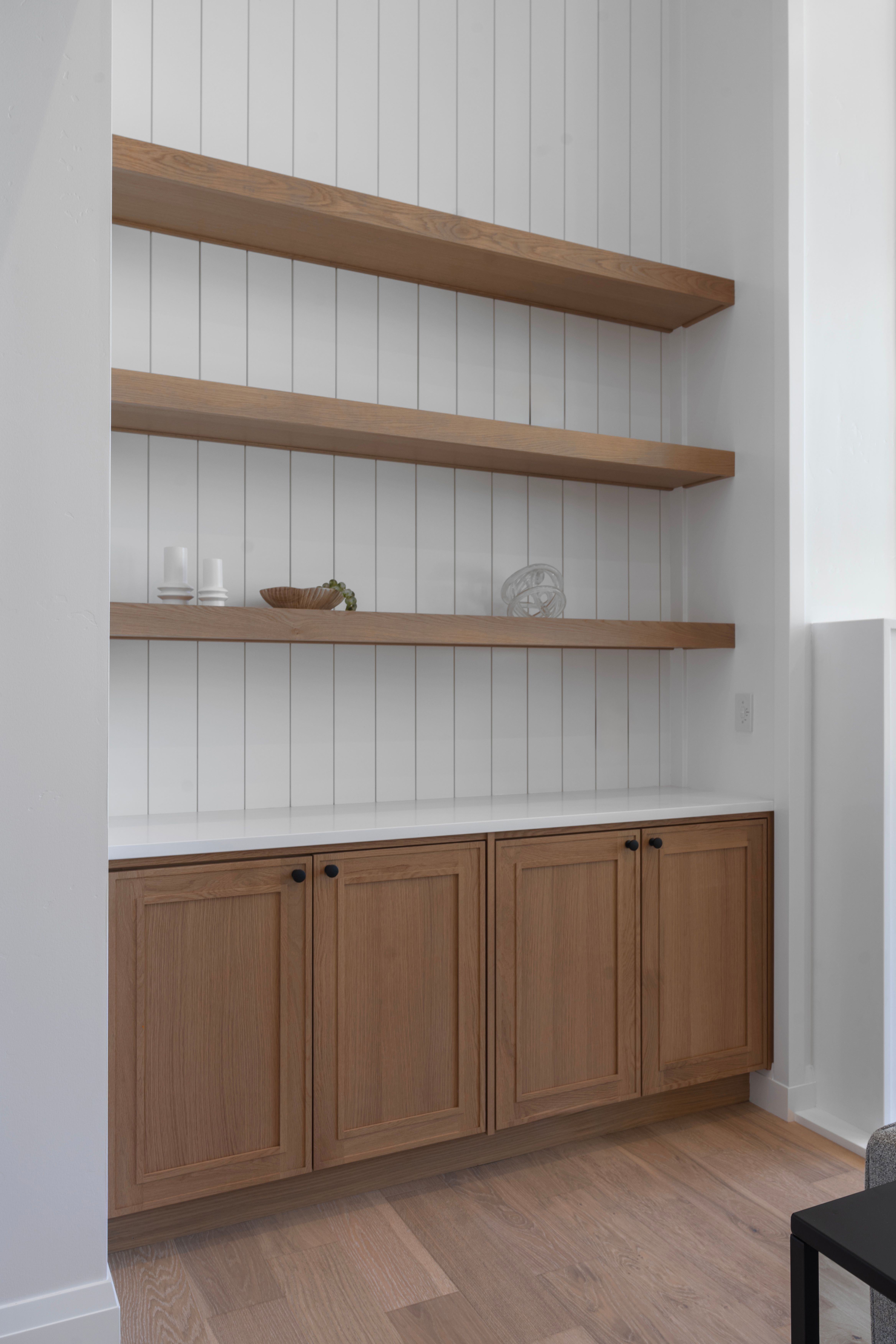
The biggest single decision is whether you're going engineered or natural. Once that's settled, everything else is a finer-grained choice.
A few starting points:
- If you cook hard and don't want to think about it: A warm-cream quartz with a soft veining pattern, eased edge, no waterfall. The "set it and forget it" pick.
- If you want drama on a budget: Quartz with bold veining, mitered edge, waterfall on the island only.
- If you want a real natural stone: Quartzite in a leathered finish — closest thing to the look of marble with much better day-to-day durability.
- If you want something genuinely unusual: Soapstone or honed black granite on a smaller surface like a coffee bar or baking station.
Ready to see slabs in person? Visit 4630 E Sprague Ave, Spokane, WA Monday through Friday, 9am to 5pm. Call (509) 218-3349 or send us a message to schedule time with a designer. You can also browse our countertop options and recent Spokane projects.