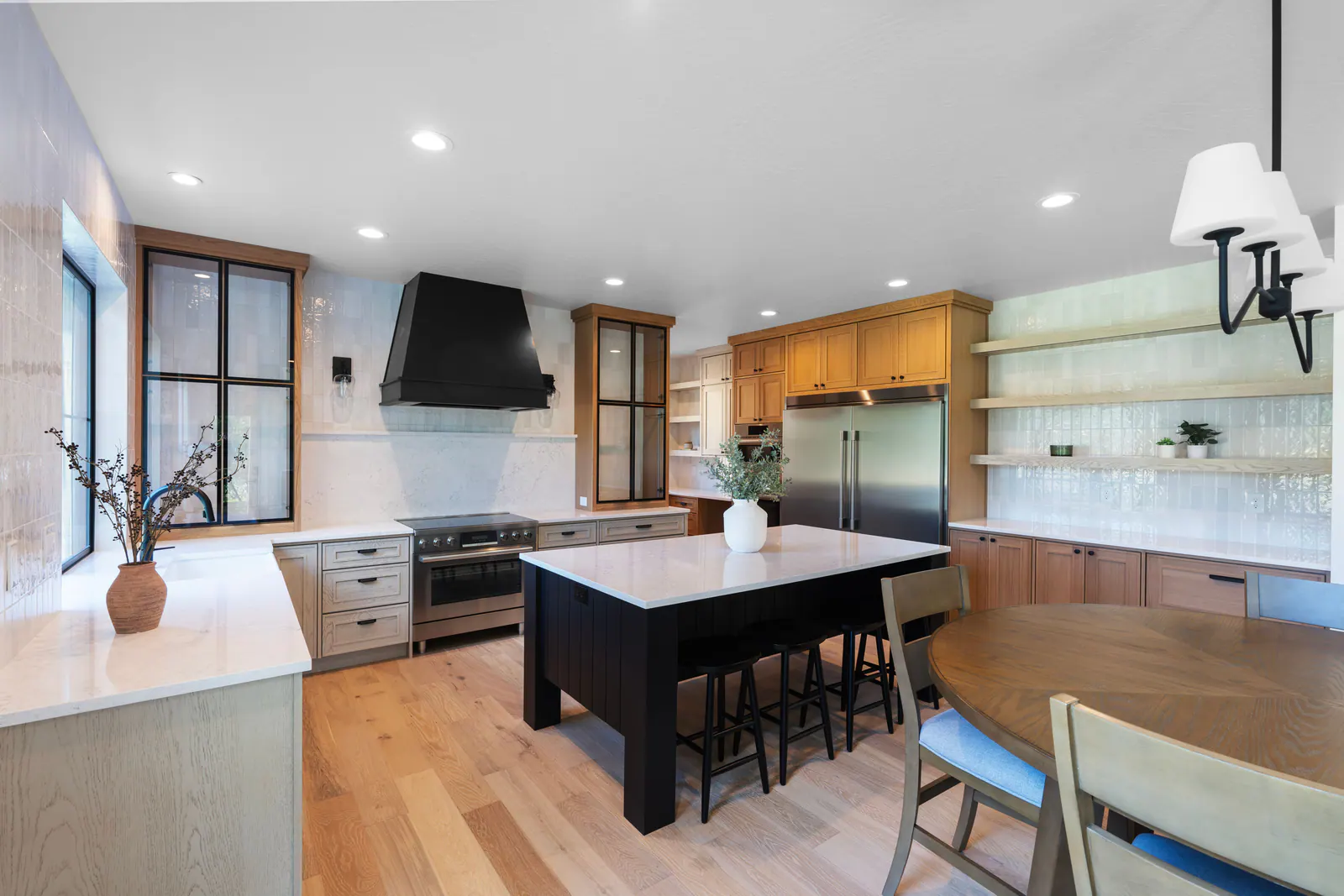

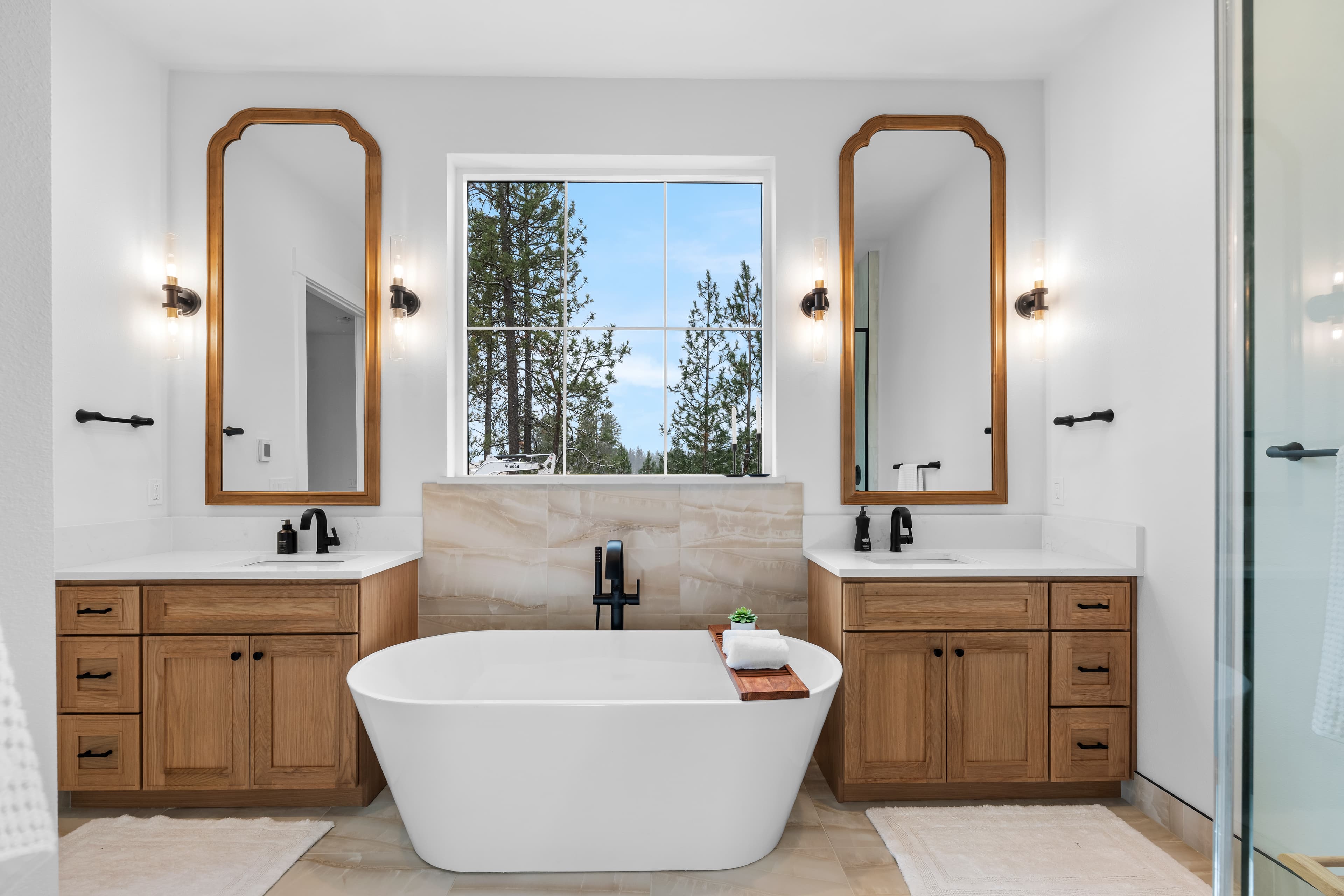
A countertop is one of the few surfaces in a home that you both look at and touch every single day. The right choice usually comes down to two questions: how do you cook, and how much maintenance are you actually willing to do?
This guide walks through the materials we sell most often, what each one is really best at, and the day-to-day care that keeps it looking the way it did the day it was templated.
The Main Countertop Materials
There are dozens of stone names out there, but in a real Spokane kitchen the choice almost always comes down to a short list. Here's what each one actually means in daily use.
Quartz
Engineered from natural quartz crystals bound with resin and pigment. The "engineered" part is what makes it predictable: the slab you order looks like the sample you picked, and the surface is non-porous straight off the truck.
- Strengths: No sealing ever, very stain resistant, hundreds of consistent colors and patterns.
- Watch-outs: Not as heat tolerant as natural stone — always use a trivet for hot pans. Direct, prolonged sun can fade some colors over years.
- Best for: Busy households that want a low-maintenance surface without giving up the look of stone.
Quartzite
A natural stone (despite the name overlap with quartz). It's formed when sandstone gets cooked under pressure deep in the earth, and the result is genuinely hard — often harder than granite — with a marble-like movement.
- Strengths: Heat and scratch resistant, natural veining you can't replicate in engineered material.
- Watch-outs: Real quartzite is porous and needs sealing on a manufacturer-recommended schedule. Some slabs labeled "quartzite" are actually softer dolomitic stone, which etches like marble — always confirm the spec.
- Best for: Homeowners who want the drama of natural stone with more durability than marble.
Granite
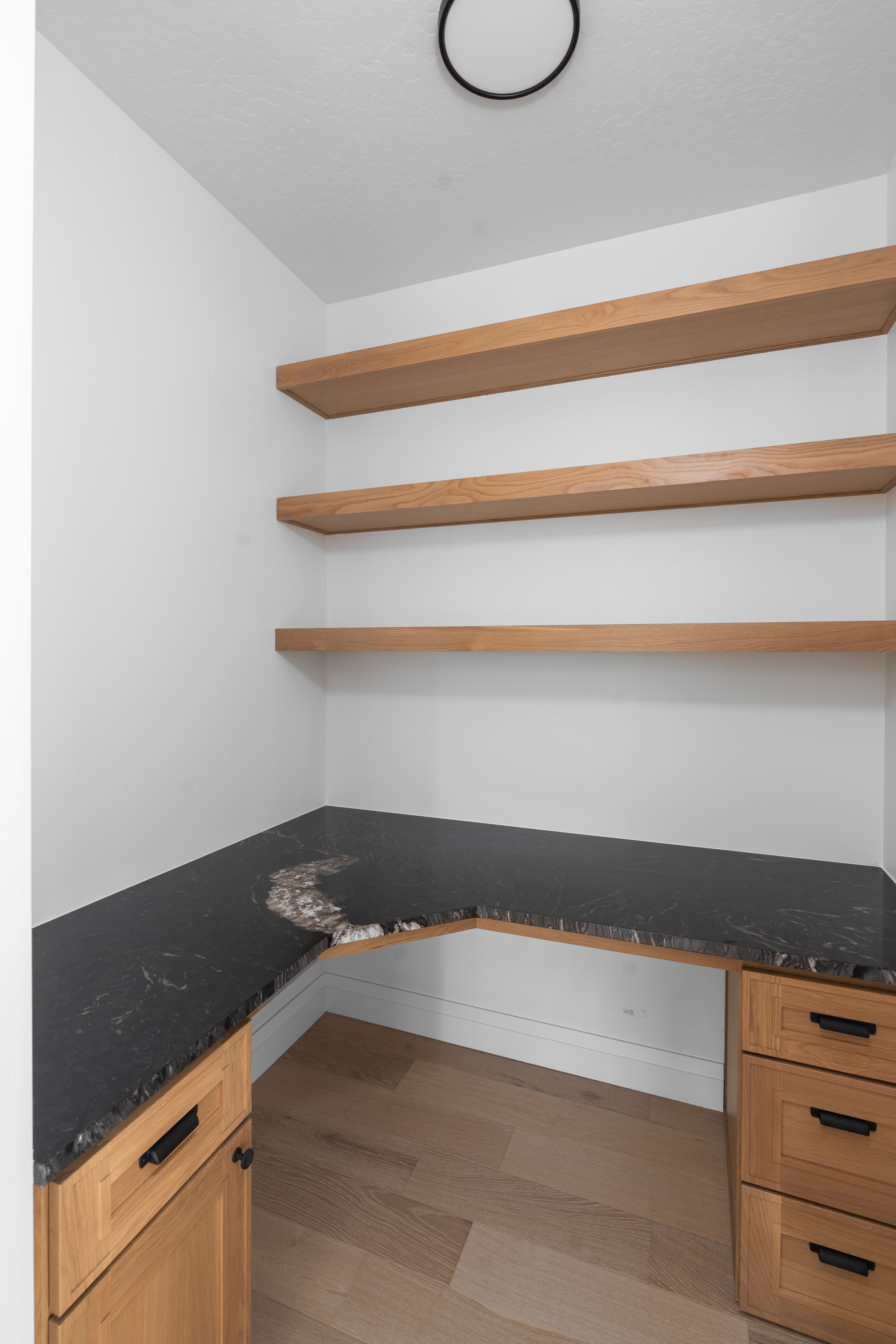
The classic natural stone. Granite is essentially crystallized magma, which is why it's so hard and so heat tolerant — you can put a hot pan straight on it without a trivet (though we still don't recommend it as a habit).
- Strengths: Excellent heat and scratch resistance, every slab is one of a kind, holds resale value.
- Watch-outs: Needs sealing — for most stones, every one to two years. Can chip on a hard impact at the edge.
- Best for: Active kitchens where the natural stone look is the goal and a little maintenance is fine.
Marble
Mostly calcium carbonate, which gives marble its soft, luminous look — and also its biggest weakness. It etches when it meets anything acidic, which in a kitchen means lemon juice, vinegar, wine, and tomato sauce.
- Strengths: Unmatched character, especially on a large island or fireplace surround.
- Watch-outs: Etches and stains easily, scratches more readily than granite or quartzite, and needs sealing every three to six months in heavy-use rooms.
- Best for: Bathrooms, baking stations, and homeowners who genuinely embrace the way marble develops a patina over time.
Other Natural Stones
Beyond the headliners there's a category of less common but beautiful options — soapstone, limestone, travertine, slate, and even lava stone. Each one has its own personality.
- Soapstone is non-porous and chemically inert, which is why labs use it. Softer than granite, so it scratches more easily and patinas with mineral oil over time.
- Limestone and travertine lean coastal and Mediterranean. Soft and porous — better suited to lower-traffic surfaces.
- Slate is a tough underdog. Matte finish, naturally muted colors, modest sealing needs.
If one of these caught your eye, it's worth looking at full slabs in person before committing. The variation between samples can be dramatic.
A Quick At-a-Glance Comparison
| Material | Sealing | Heat | Scratch | Stain |
| Quartz | Never | Moderate | High | Very high |
| Quartzite | Yearly | High | High | Moderate (sealed) |
| Granite | Every 1–2 years | Very high | High | Moderate (sealed) |
| Marble | Every 3–6 months | High | Moderate | Low (etches) |
| Soapstone | Never (oil optional) | Very high | Moderate | High |
Care and Maintenance
Most countertop problems we get called about are preventable. Here's the routine that actually keeps each surface in shape.
Stone in General
- Use trivets for anything straight off the burner. Repeated heat shock is what causes hairline cracking in natural stone.
- Wipe spills as they happen, especially anything acidic.
- Cutting boards, always. Even on granite — knives dull on stone, and a dropped knife can chip an edge.
- Don't sit or stand on a counter, even briefly. Stone is strong in compression but brittle in unsupported spans.
- Reseal on the schedule the fabricator gave you, not when you "remember."
Granite
- Daily clean: a teaspoon of dish soap in four cups of warm water with a soft cloth.
- Skip vinegar, lemon juice, and bathroom cleaners with citric acid — they dull the polish over time.
- For a stubborn stain, a paste of baking soda and a little water (or hydrogen peroxide for organic stains) under plastic wrap overnight usually pulls it out. Reseal afterward.
Marble
- Wipe spills the moment they happen. The window for an etch is short.
- Mild dish soap and warm water for daily care — never a multi-surface cleaner.
- Reseal every three to six months in a working kitchen, less often in a bath.
- Light etches can be polished out with marble polishing powder; deeper damage usually needs a pro.
Quartz
- Daily clean: warm water and a soft cloth or non-abrasive cleaner. Glass cleaner works in a pinch.
- For dried-on residue (paint, nail polish, candle wax), scrape gently with a plastic putty knife — never metal.
- Keep direct heat off the surface. A spot that gets repeatedly scorched will cloud the resin over time.
Quartzite
- Seal at least annually — more often in a heavy-use kitchen.
- Daily clean: damp microfiber and a mild detergent.
- Avoid acidic cleaners and abrasive pads.
- For a tough stain, a poultice or baking-soda paste under plastic wrap usually does the job.
Soapstone and Other Soft Stones
- Soapstone takes a wipe with mineral oil if you want to deepen the color and even out the patina; skip the oil and it slowly weathers to a soft gray.
- Avoid oils on lighter stones like limestone — they'll stain.
- Treat scratches as part of the look, or sand them out gently with a high-grit pad on tougher stones.
How to Pick the Right One
If you're stuck between options, here's the short version of the conversation we have at the showroom every week:
- Cooking style first. Heavy daily cooking with kids around? Quartz or granite. Light cooking, lots of entertaining? Quartzite or marble are on the table.
- Maintenance honesty. If sealing isn't going to happen, don't pick a material that needs it.
- The look you actually love. A working surface should be one you enjoy — don't pick the practical option if every time you walk in the room you'll wish you'd gone with the natural stone.
- See full slabs. Sample chips can't show you the movement, scale, or color shift in a real piece. We'll always pull slabs for you to walk before ordering.
Ready to compare in person? Visit the showroom at 4630 E Sprague Ave, Spokane, WA Monday through Friday, 9am to 5pm. Call (509) 218-3349, send us a message, or browse our countertop options and recent projects online.